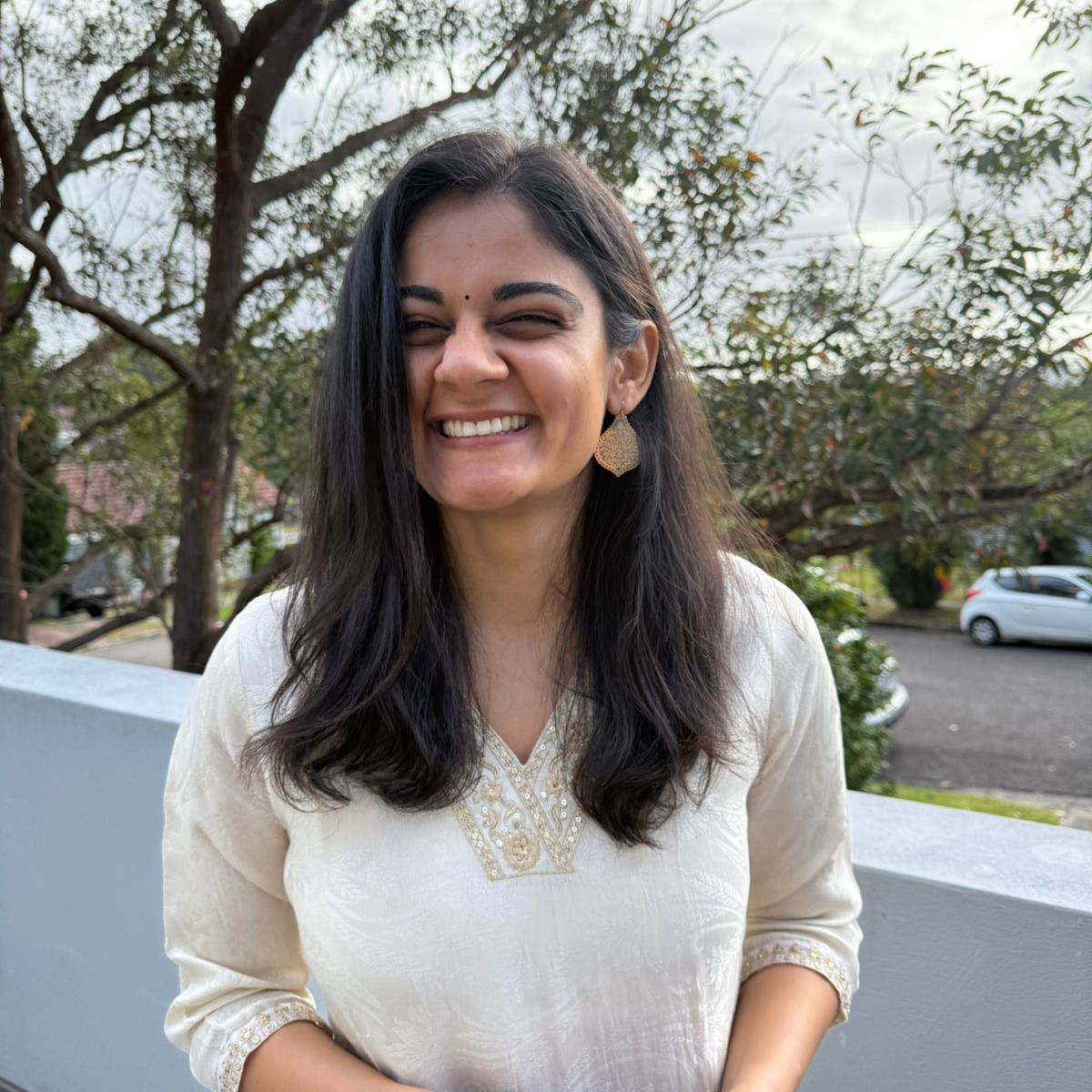
I am a postdoc working in Michael Breakspear’s Systems Neuroscience Group at the University of Newcastle, Australia. I study how large-scale brain dynamics emerge from the interaction between neural geometry, coupling, and nonlinear population dynamics. My work uses biophysically grounded neural field and neural mass models to explain how phenomena such as traveling waves, entrainment, and critical state transitions in cortical and hippocampal systems emerge dynamically.
These phenomena can sometimes masquerade as functional structure or state changes in neuroimaging data. By combining theory, numerical modeling, and neuroimaging data, I aim to develop principled inference methods that distinguish genuine dynamical brain states from artefacts arising due to spatial autocorrelation, stimulation protocols, or preprocessing choices. This work has implications for how we interpret large-scale brain organization in both healthy cognition and pathological states.
Research Interests
1. Brain dynamics and state transitions
I study how brain states emerge, reorganise, and break down in neural systems, which are inherently very non-linear. My work focuses on understanding the mechanisms underlying the transitions between regimes of neural activity and identifying when these transitions reflect genuine changes in underlying neural mechanisms.
2. Dynamical modelling
I use dynamical systems models such as neural field theory, neural mass models, or single neuron models to study brain activity. My recent work focuses on understanding how cortical folding, surface geometry, and coupling constrain the dynamics of these systems.
3. Entrainment, perturbations, and inference
I investigate how external perturbations, such as sensory stimulation or noise, interact with intrinsic brain dynamics. This includes studying entrainment, bifurcations, and nonlinear responses, and using these effects to probe the stability of large-scale brain states and the limits of dynamical inference.